
Guyana grows. The world takes note.
Read the text of each slide
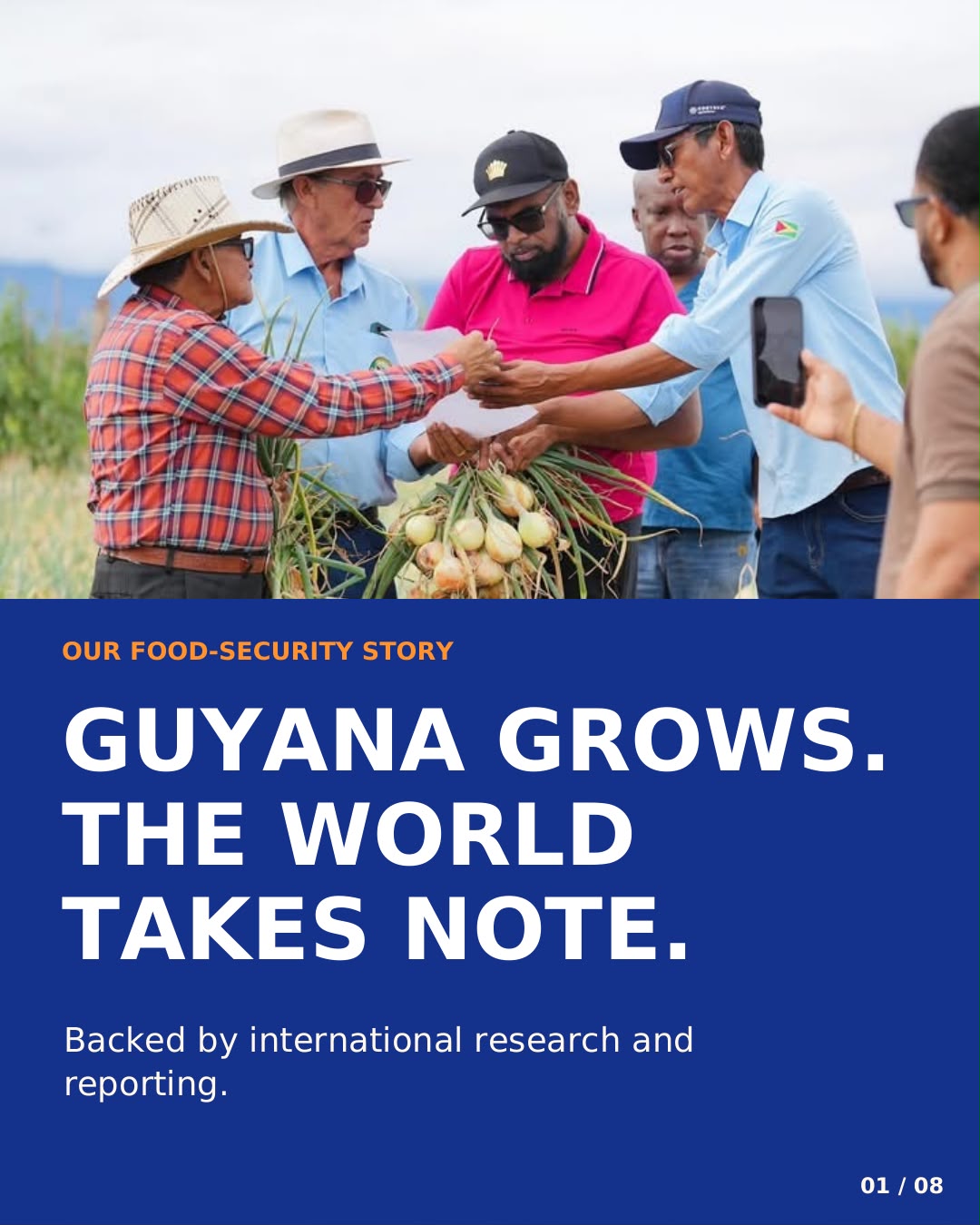
- Our food-security story. Guyana grows. The world takes note. Backed by international research and reporting. Photo: farmers and officials with freshly harvested onions in a field.
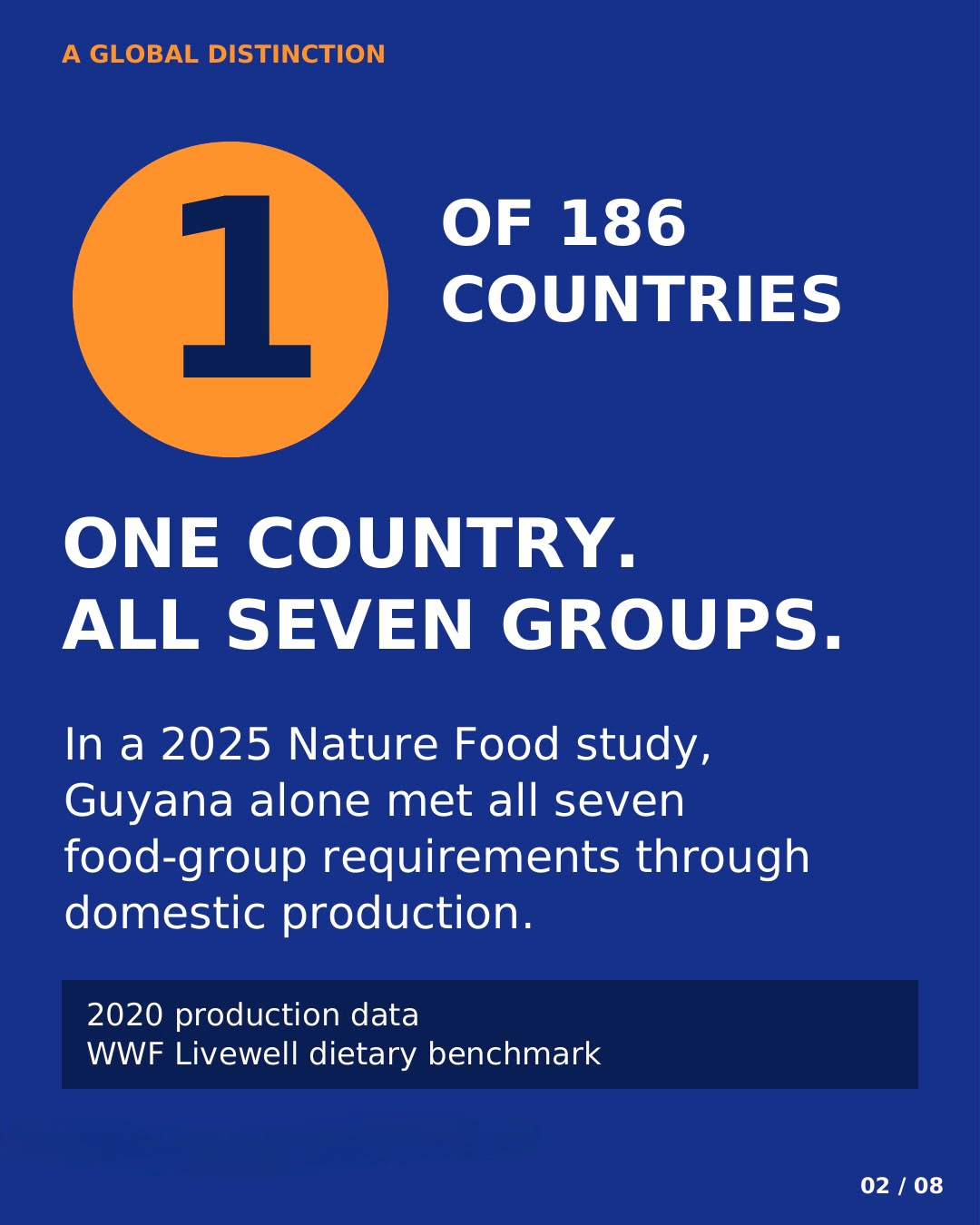
- A global distinction. 1 of 186 countries. One country. All seven groups. In a 2025 Nature Food study, Guyana alone met all seven food-group requirements through domestic production. 2020 production data; WWF Livewell dietary benchmark.
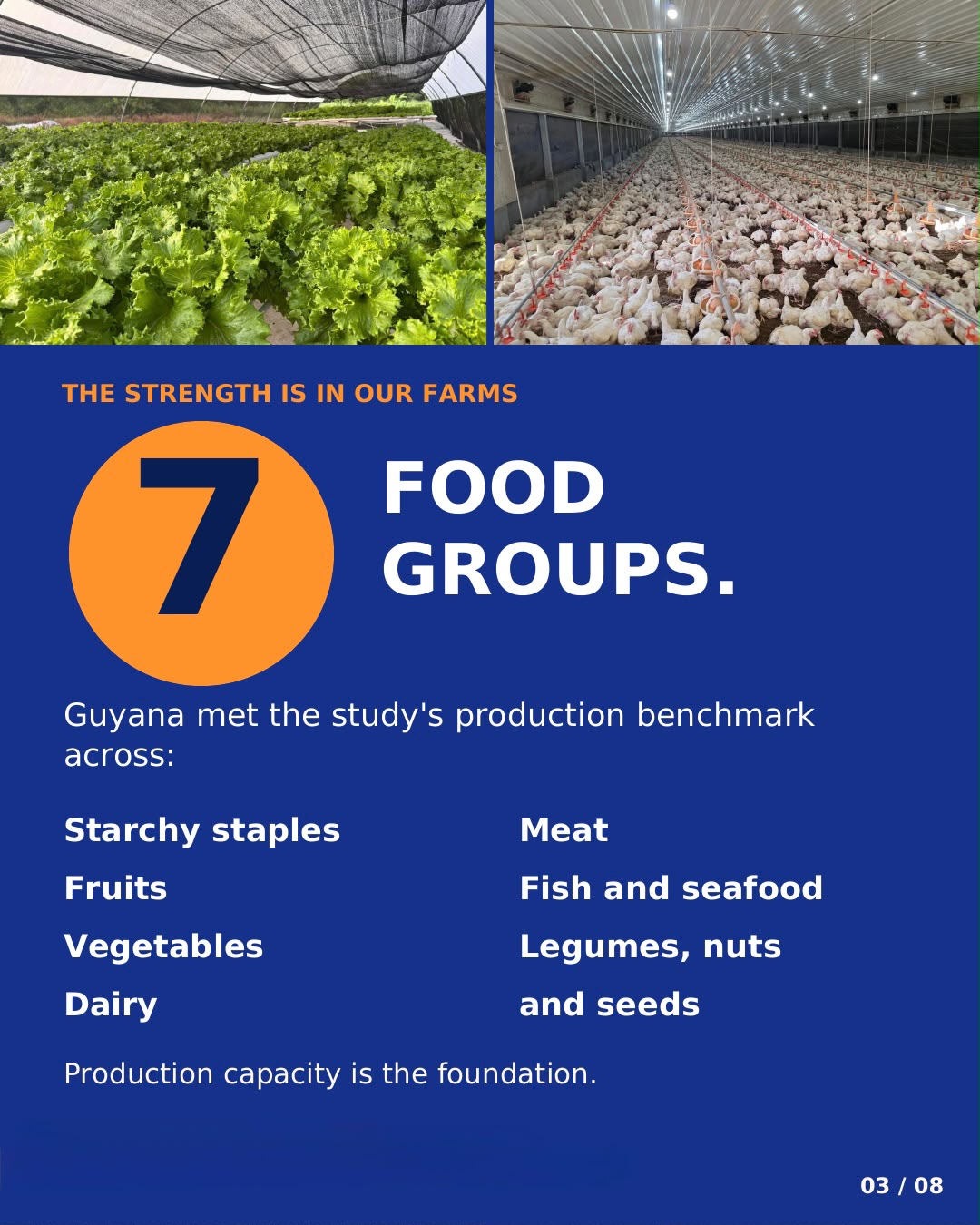
- The strength is in our farms. 7 food groups. Guyana met the study’s production benchmark across: starchy staples, fruits, vegetables, dairy, meat, fish and seafood, and legumes, nuts and seeds. Production capacity is the foundation. Photos: lettuce growing in a shade house, and a poultry house.
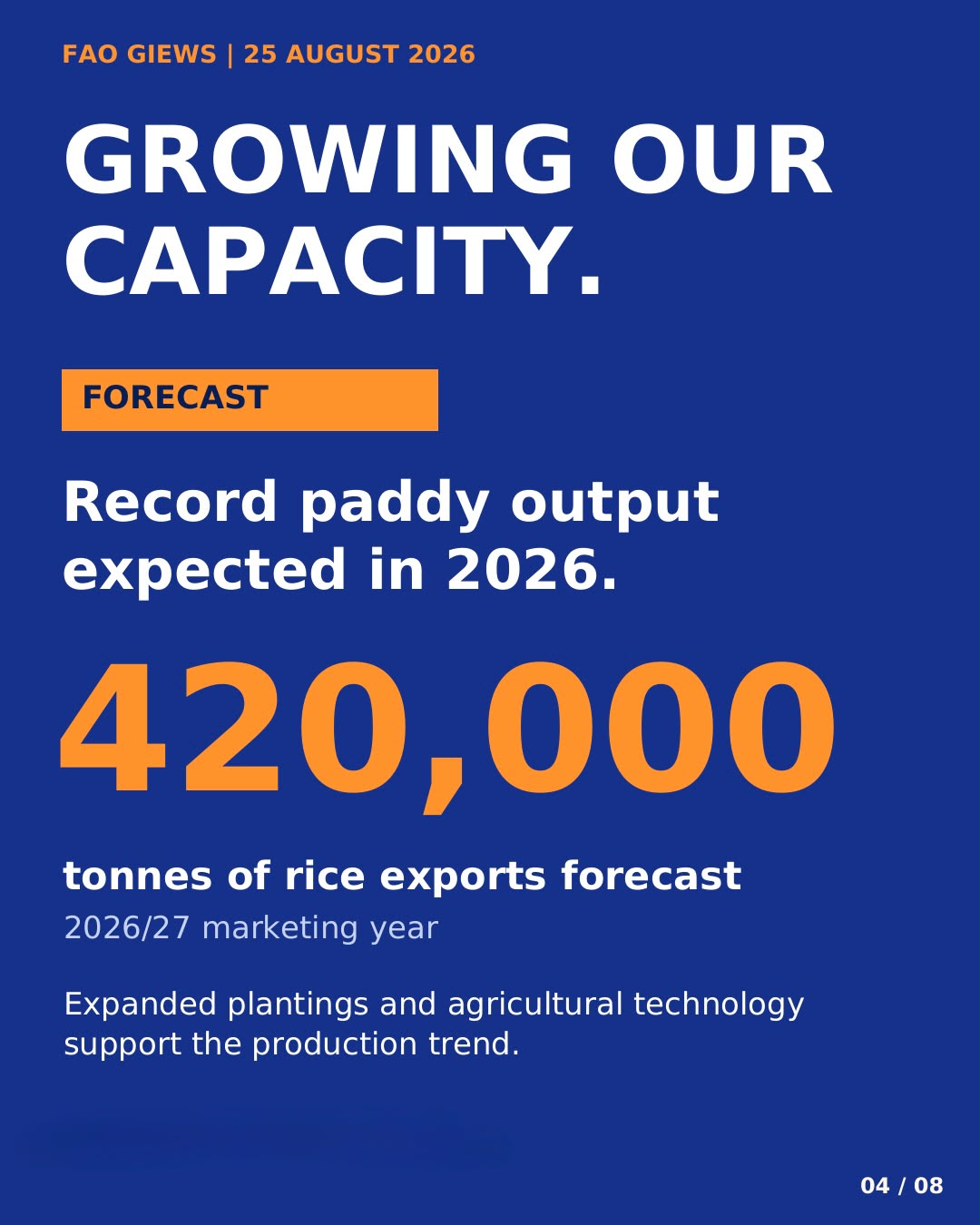
- FAO GIEWS, 25 August 2026. Growing our capacity. Forecast: record paddy output expected in 2026. 420,000 tonnes of rice exports forecast for the 2026/27 marketing year. Expanded plantings and agricultural technology support the production trend.
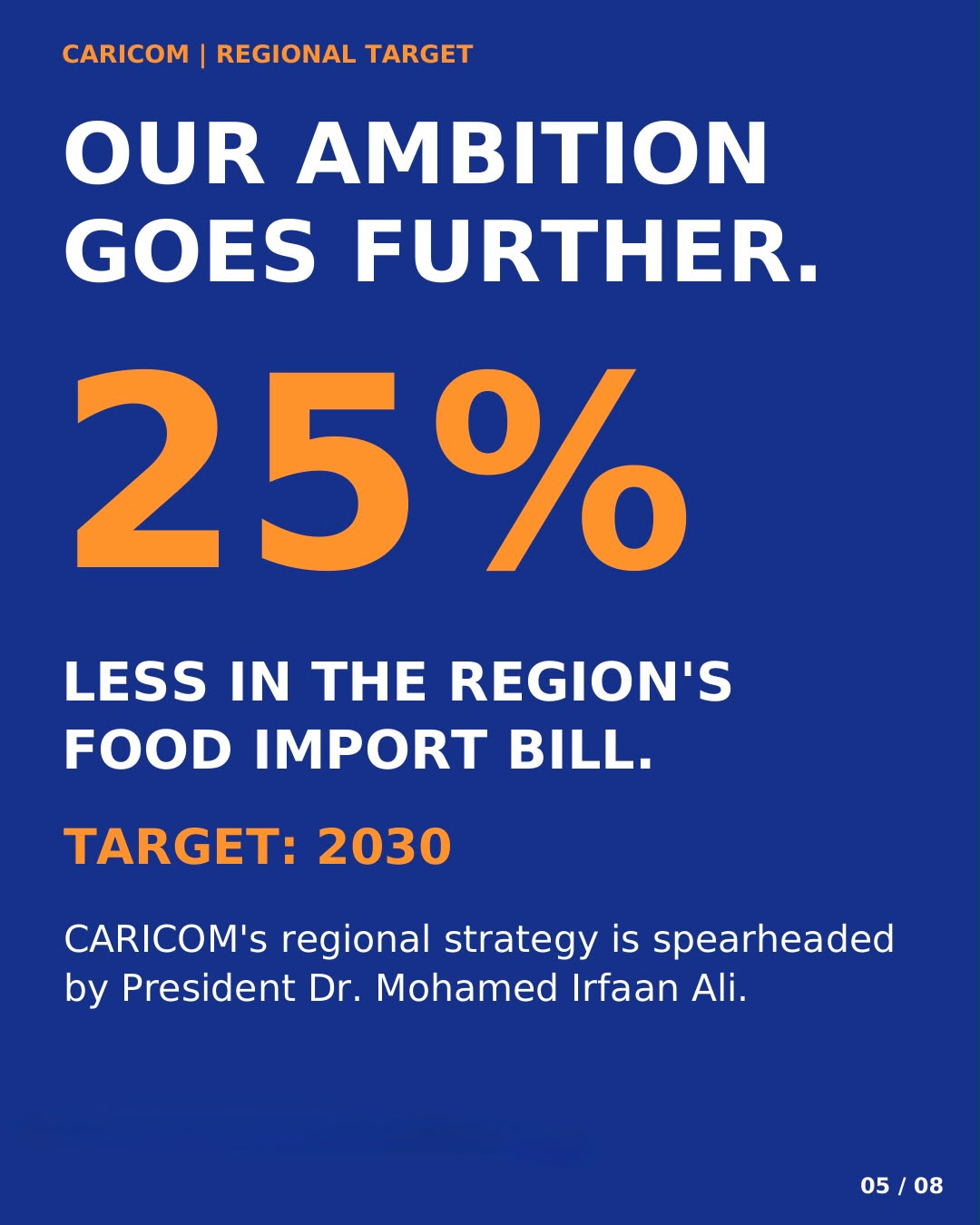
- CARICOM regional target. Our ambition goes further. 25% less in the region’s food import bill. Target: 2030. CARICOM’s regional strategy is spearheaded by President Dr. Mohamed Irfaan Ali.
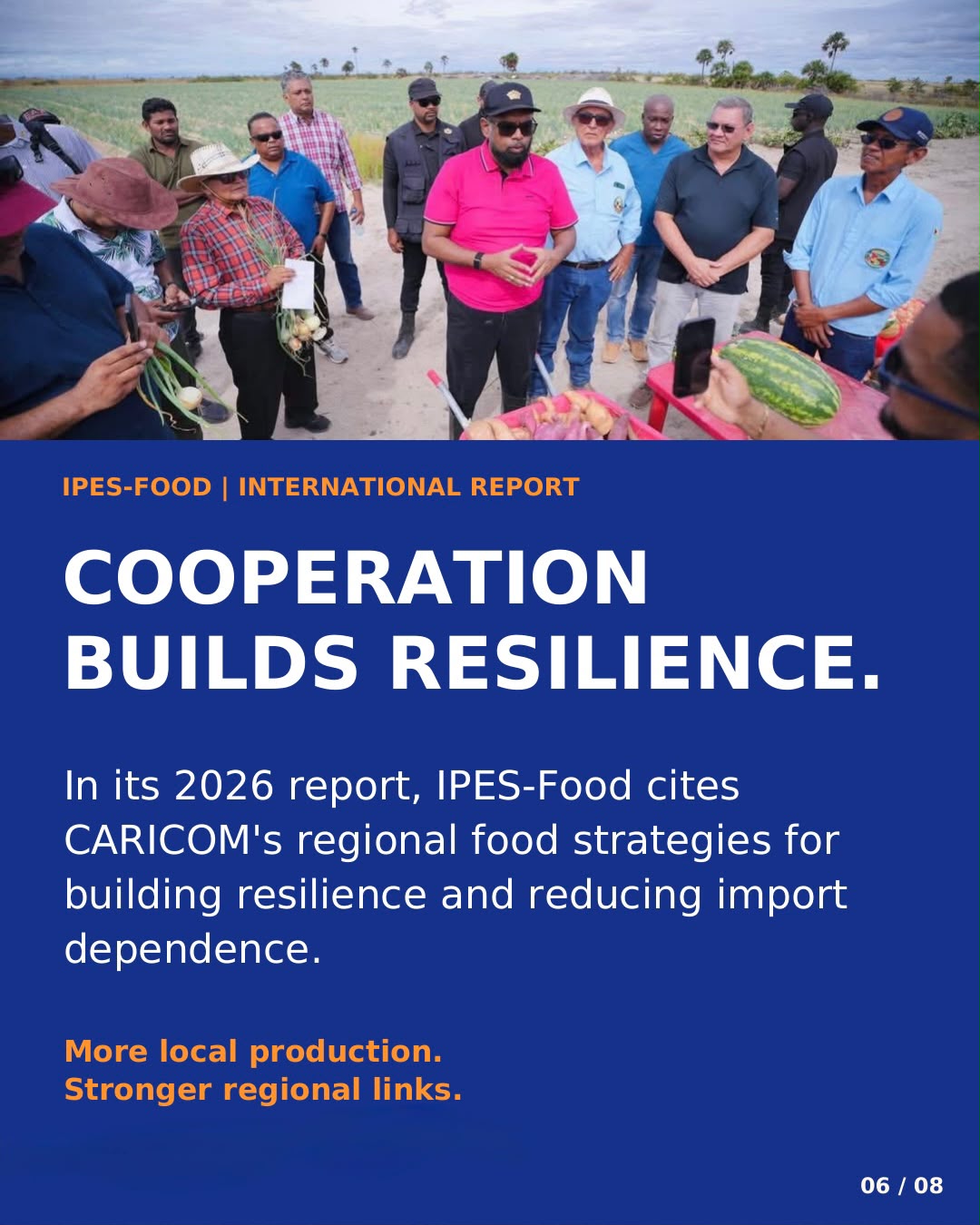
- IPES-Food international report. Cooperation builds resilience. In its 2026 report, IPES-Food cites CARICOM’s regional food strategies for building resilience and reducing import dependence. More local production. Stronger regional links. Photo: officials and farmers meeting in a field.
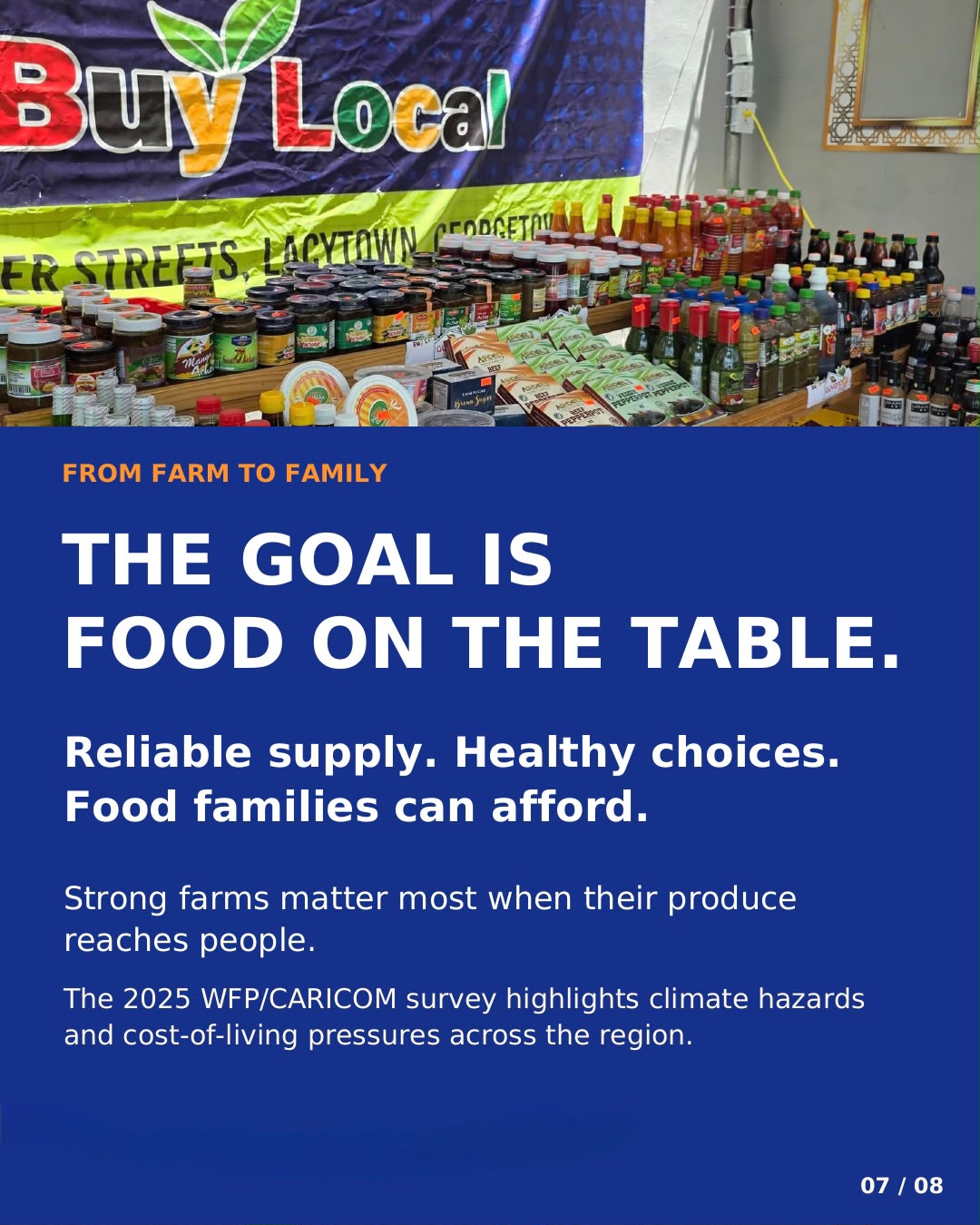
- From farm to family. The goal is food on the table. Reliable supply. Healthy choices. Food families can afford. Strong farms matter most when their produce reaches people. The 2025 WFP/CARICOM survey highlights climate hazards and cost-of-living pressures across the region. Photo: a “Buy Local” display of Guyanese food products.
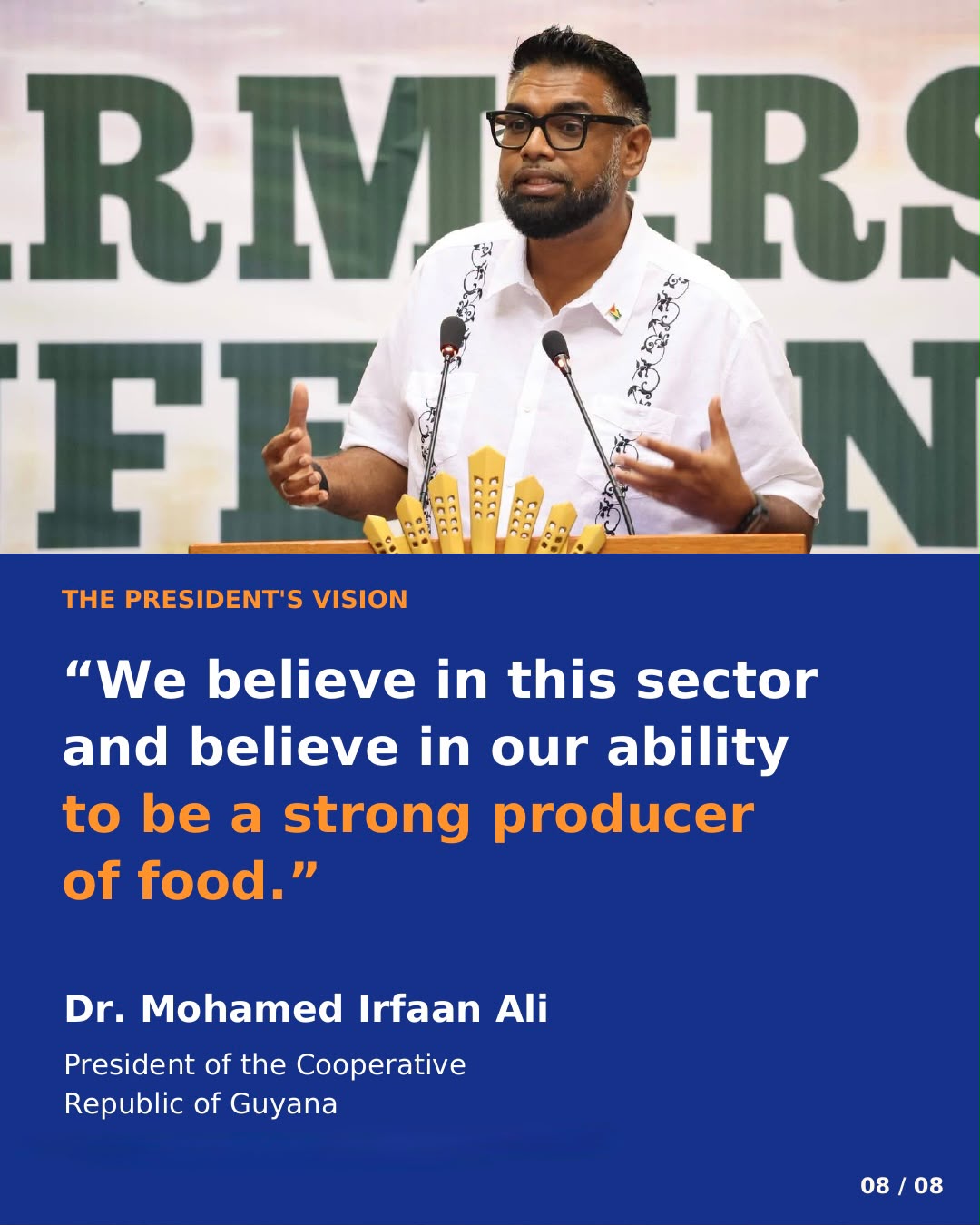
- The President’s vision. “We believe in this sector and believe in our ability to be a strong producer of food.” Dr. Mohamed Irfaan Ali, President of the Cooperative Republic of Guyana. Photo: the President speaking at a podium.
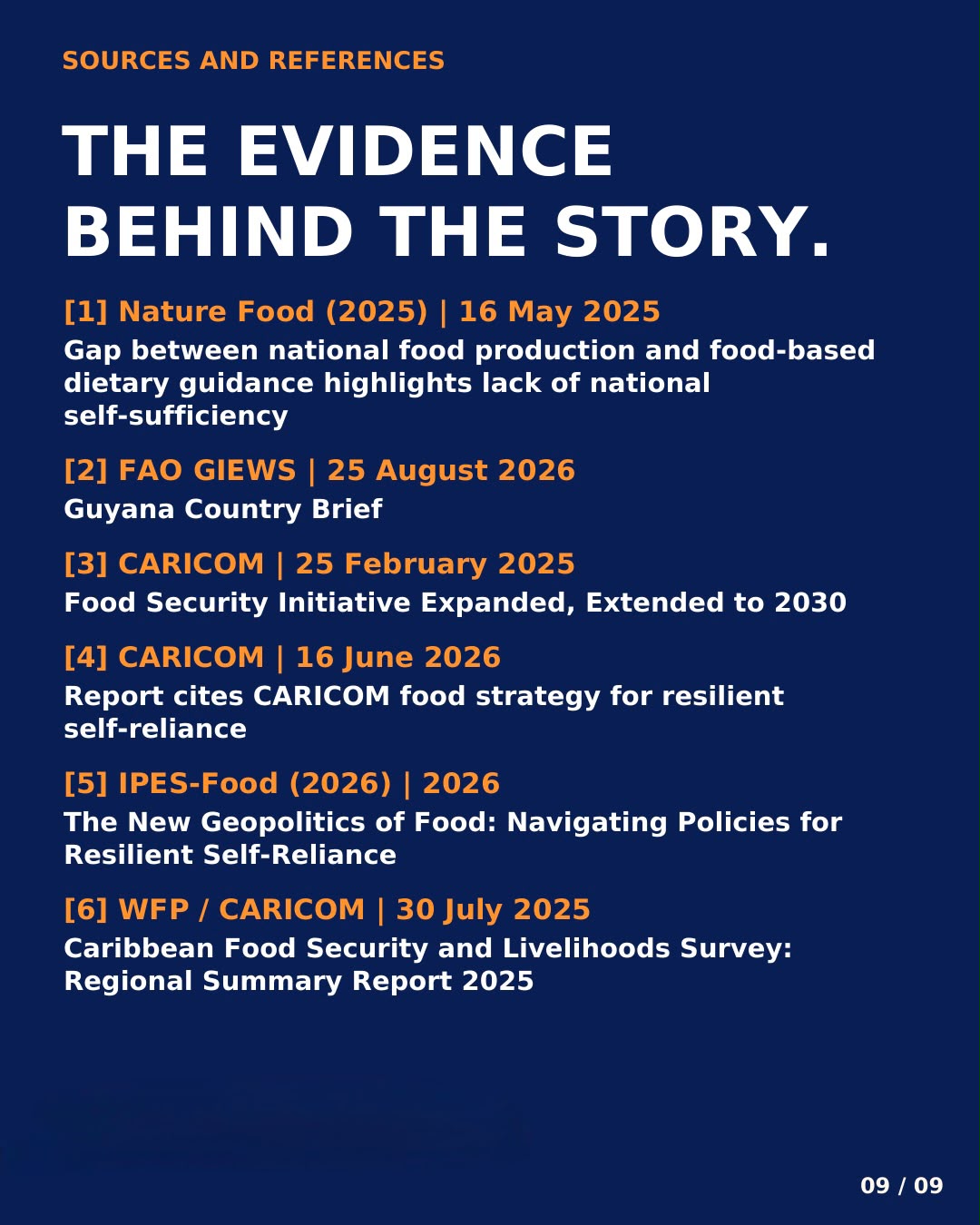
- Sources and references: the evidence behind the story. [1] Nature Food (2025), 16 May 2025: Gap between national food production and food-based dietary guidance highlights lack of national self-sufficiency. [2] FAO GIEWS, 25 August 2026: Guyana Country Brief. [3] CARICOM, 25 February 2025: Food Security Initiative Expanded, Extended to 2030. [4] CARICOM, 16 June 2026: Report cites CARICOM food strategy for resilient self-reliance. [5] IPES-Food (2026): The New Geopolitics of Food: Navigating Policies for Resilient Self-Reliance. [6] WFP/CARICOM, 30 July 2025: Caribbean Food Security and Livelihoods Survey: Regional Summary Report 2025.
In a 2025 study published in Nature Food, Guyana was the only one of 186 countries whose own production met all seven food-group requirements: starchy staples, fruits, vegetables, dairy, meat, fish and seafood, and legumes, nuts and seeds. The study used 2020 production data and the WWF Livewell dietary benchmark.
The UN Food and Agriculture Organization’s GIEWS country brief of 25 August 2026 expects record paddy output in 2026, with 420,000 tonnes of rice exports forecast for the 2026/27 marketing year, supported by expanded plantings and agricultural technology.
Across the region, CARICOM aims to cut the Caribbean’s food import bill by 25% by 2030, a strategy spearheaded by President Dr. Mohamed Irfaan Ali. In its 2026 report, IPES-Food cites CARICOM’s regional food strategies for building resilience and reducing import dependence.
The goal is food on the table: reliable supply, healthy choices and food families can afford. The 2025 WFP/CARICOM survey highlights climate hazards and cost-of-living pressures across the region.
“We believe in this sector and believe in our ability to be a strong producer of food.” Dr. Mohamed Irfaan Ali, President of the Cooperative Republic of Guyana
Sources
- Nature Food (16 May 2025): Gap between national food production and food-based dietary guidance highlights lack of national self-sufficiency.
- FAO GIEWS (25 August 2026): Guyana Country Brief.
- CARICOM (25 February 2025): Food Security Initiative Expanded, Extended to 2030.
- CARICOM (16 June 2026): Report cites CARICOM food strategy for resilient self-reliance.
- IPES-Food (2026): The New Geopolitics of Food: Navigating Policies for Resilient Self-Reliance.
- WFP/CARICOM (30 July 2025): Caribbean Food Security and Livelihoods Survey: Regional Summary Report 2025.